AI Sales Agents for Small Teams: Costs, CRM Fit and Approval Controls
Budget the complete workflow and choose a system that a small team can operate without adding another full-time administration job.
The short answer
For a small team, shortlist the tool that fits the existing workflow: Gojiberry for signal-led prospecting, HubSpot for CRM-centered work or Apollo for data and sales execution. Include seats, credits, integrations and review time in the cost. Prefer a clear owner and a controllable first workflow over maximum automation.
Side by side
| Your situation | Useful route | Check before choosing |
|---|---|---|
| Signal-led discovery needed | Gojiberry shortlist | Core quote plus agents, sources and credits |
| Team already lives in HubSpot | CRM-centered agent shortlist | Subscription and usage budget |
| Data and sales execution needed | Apollo shortlist | Plan access and supporting workflow |
Start with the work one person can own
A small team benefits from fewer handoffs. Name the person who will review prospects, approve messages and handle replies. If those responsibilities are unclear, adding an agent can multiply unattended lists rather than improve sales.
Choose one narrow starting point, such as preparing a reviewed account list or drafting follow-ups for an existing pipeline. Keep the CRM as the record of ownership and outcome. Do not create a second source of truth merely because a new product offers an attractive dashboard.
Gojiberry: check agents, seats and add-ons
Gojiberry’s pricing explanation separates the core subscription from additional agents, lead sources and credits. The checked document describes two agents and two LinkedIn seats in the standard setup, but does not establish a complete base-subscription quote for this comparison.
Ask what your intended audience and sender arrangement require. A second campaign, another source and another organizational member may be different charges. Do not present an add-on price as the full cost of the service, or use a similarly named survey product’s pricing by mistake.
HubSpot and Apollo: count what you already have
HubSpot’s credit documentation describes usage-based features and spending controls. If the team already works in HubSpot, the existing CRM context may reduce duplicate setup, but the relevant subscription and credit costs still need to be checked.
Apollo’s pricing page has plan-dependent data, intent and automation features. Compare the entitlement needed for the actual workflow, including enrichment and sender use. A platform can be a good fit without every AI feature being an autonomous agent, and a free entry plan may not cover the complete sales process.
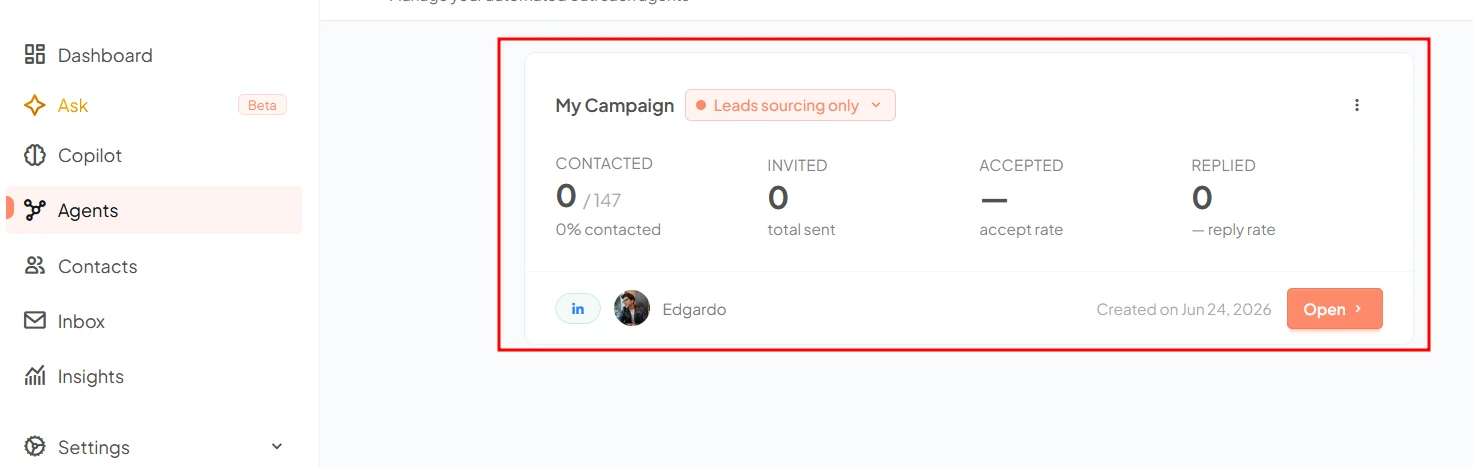
Image source and original context

Build a realistic cost worksheet
Use five rows: platform commitment, seats, credits or enrichment, supporting services and review time. Add the period and renewal basis so annual commitments are not mistaken for monthly flexibility. Keep unknown charges visible until the provider or checkout clarifies them.
Set an initial usage budget and an owner who can inspect spending. If available, configure the product’s actual spending controls rather than relying solely on an informal instruction to an agent. Keep a manual fallback for the small number of cases that do not fit the automated path.
Choose for the next month of work
Prefer the tool that solves a real current bottleneck with understandable inputs and outputs. Signal-led discovery is useful when the team lacks relevant accounts; CRM-based assistance is useful when the pipeline exists but follow-up is inconsistent. Data access is useful when research begins with incomplete records.
Reassess after a small, reviewed operating period. Look at relevance, duplicate work, corrections and useful conversations, not just the volume of generated activity. Expand only the part that is helping. A small team should be able to explain what the agent does, what it costs and when a person takes over.
Limitations & considerations
- Check current access and purchase terms for your country and account before paying.
Use the linked official pages for current platform, access and purchase conditions.
Sources & scope
Reviewed October 24, 2026. Product facts follow the linked provider documentation. Selection advice and example prompts are iApp4Me editorial guidance. Screenshots and provider examples are credited beside each image. Availability and plan terms are dated October 24, 2026.
- Gojiberry: pricing explained
Seats, agents, credits and optional add-ons; base price not established here.
- HubSpot: manage credits
Account and tool spending limits for usage-based features.
- Apollo: plans and pricing
Plan-specific sales data, intent, automation and AI access.
- HubSpot: Prospecting Agent
CRM-integrated prospecting and engagement workflow.
- Gojiberry: what it is and how it works
Provider signal-to-outreach workflow; conversion claims are not independent results.
No comments yet. Be the first to share your experience.