How to Use Buying Signals to Prioritize Sales Leads with AI
Turn behavioral clues into a review queue without confusing company-level interest with a person’s readiness to buy.
The short answer
Use buying signals to prioritize research, then combine them with business fit and a recent verifiable source. Score the account separately from the contact, record why the signal matters and send the highest-priority cases to review. A signal is evidence of activity, not a confirmed purchase decision.
Side by side
| Your situation | Useful route | Check before choosing |
|---|---|---|
| Strong account fit, weak timing | Keep in a research queue | No invented urgency |
| Fresh signal, wrong role | Find the responsible contact | Account activity is not personal intent |
| Traceable relevant event | Prioritize review | Keep source, date and uncertainty |
Define the question a signal should answer
A useful signal changes the timing or relevance of your research. A company hiring for a new function, publishing a relevant initiative or engaging with a problem area may be worth reviewing. The signal should connect to the problem your product solves, not merely be easy to collect.
Write the causal assumption in plain language. For example, an expanding support team may need better knowledge-sharing, but the expansion does not prove dissatisfaction with its existing software. Keep that uncertainty visible so the research queue does not become a list of invented buying stories.
Keep three layers separate
Record account fit, the observed event and contact fit as separate fields. A company can be a strong fit while the available contact has no responsibility for the problem. A relevant person can work at a company outside your market. A fresh event can concern an unrelated initiative.
This separation makes the review useful. You can defer an account with good fit but weak timing, or research a better contact without discarding a relevant company. Avoid collapsing all three layers into a single opaque “AI intent score” that no one can explain.
Use tools as sources of candidates
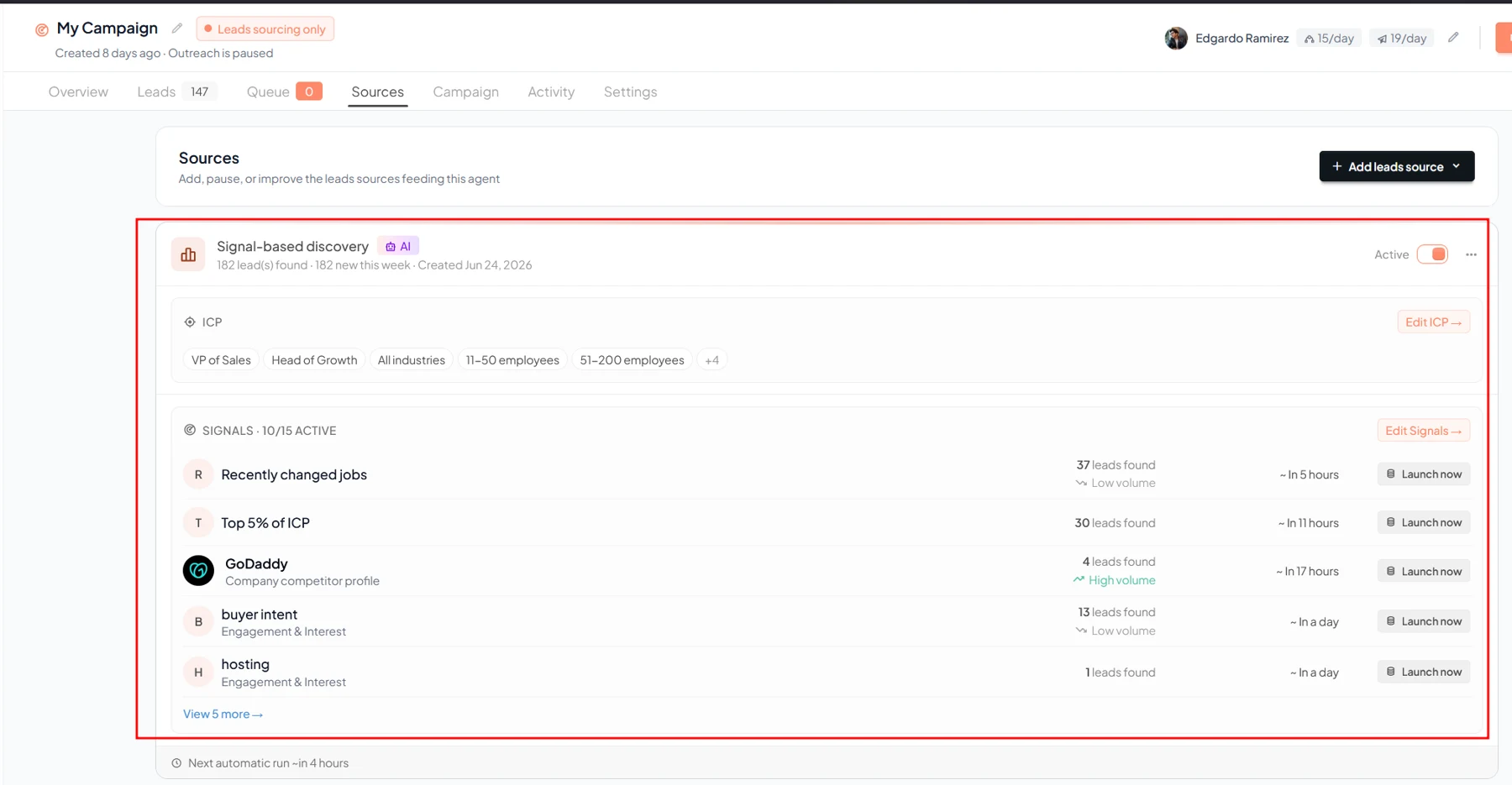
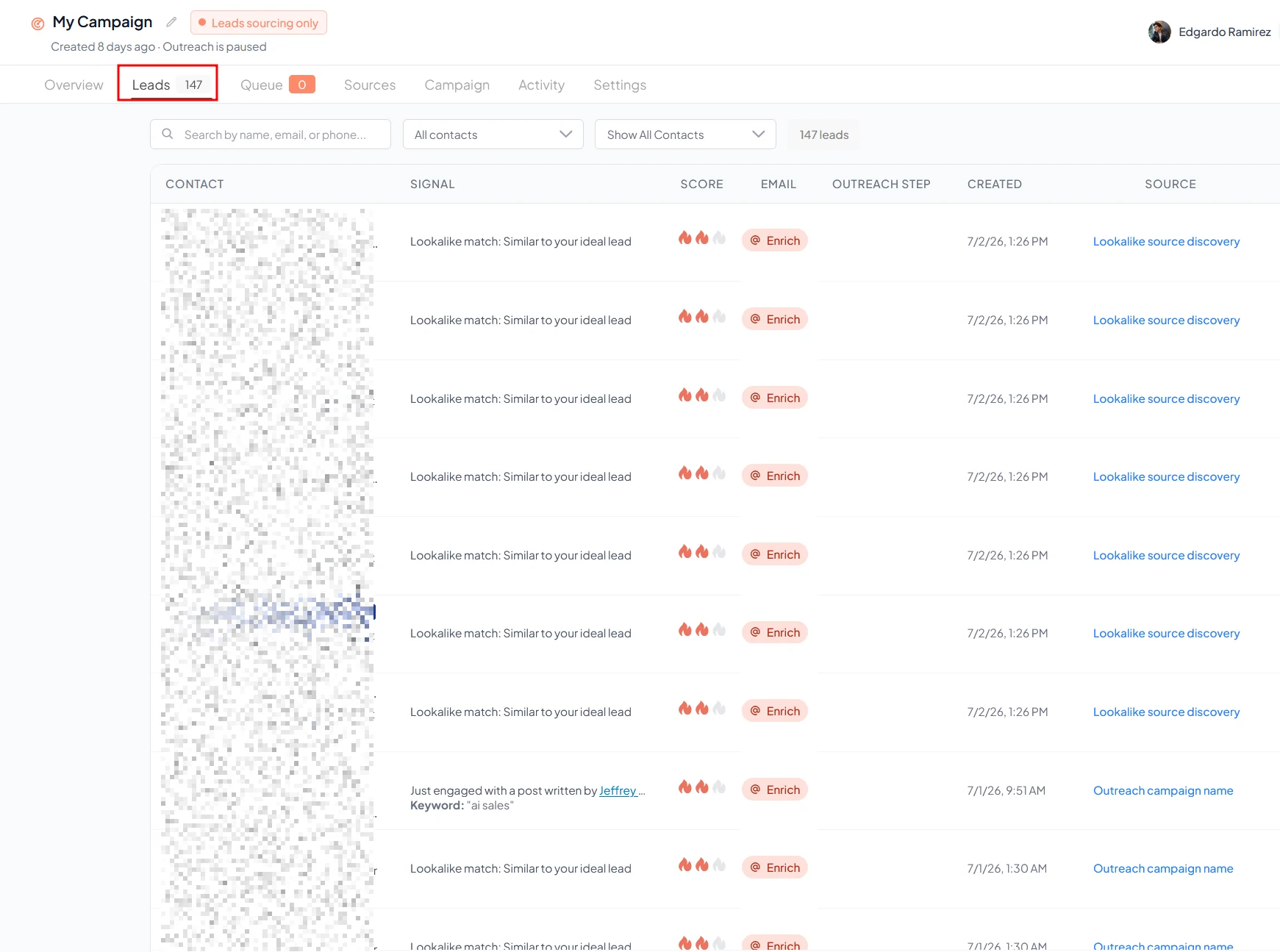
Gojiberry describes a signal-led discovery workflow, HubSpot’s Prospecting Agent works from CRM context and monitored signals, and Apollo presents plan-dependent intent and sales-data features. These are different routes into a candidate set, not identical measurements of purchase readiness.
Keep the tool’s label alongside the underlying source. If a signal cannot be traced to an observable event or a clearly described data source, give it less weight. Do not turn a provider’s marketing claim about conversion into an expectation for your own audience.
Gojiberry: what it is and how it works
Image source and original context
Build a transparent review score
Use an explicit editorial score: business fit 0–2, relevance of the observed event 0–2 and freshness 0–1. Keep contact ownership as a separate required field. A score of 4–5 can enter a review queue; it should not automatically trigger a message. This is a transparent example, not a validated prediction model.
Example: a fitting company earns 2, an old announcement earns 0 for freshness, and an event loosely related to the problem earns 1. Its total of 3 means research further. A current relevant event does not fix an incorrect contact role or an existing account owner.
Track false positives instead of only activity
For each reviewed candidate, record whether company fit, signal relevance or contact selection was wrong. “Good company, wrong role” suggests a contact-selection change; “old event, no current project” suggests a freshness rule. Those lead to different corrections.
Compare accepted accounts with reviewed accounts, and useful replies with delivered contacts, using the same batch and time window. Avoid presenting a raw number of AI-surfaced leads as evidence that the prioritization works.
Limitations & considerations
- Check current access and purchase terms for your country and account before paying.
Use the linked official pages for current platform, access and purchase conditions.
Sources & scope
Reviewed October 24, 2026. Product facts follow the linked provider documentation. Selection advice and example prompts are iApp4Me editorial guidance. Screenshots and provider examples are credited beside each image. Availability and plan terms are dated October 24, 2026.
- Gojiberry: what it is and how it works
Provider signal-to-outreach workflow; conversion claims are not independent results.
- HubSpot: Prospecting Agent
CRM-integrated prospecting and engagement workflow.
- Apollo: plans and pricing
Plan-specific sales data, intent, automation and AI access.
No comments yet. Be the first to share your experience.